One Garden At a Time

Texas - Zone 8 Contact Us! ediblekitchens@gmail.com


Kitchen gardens to date - 7!
All planted for the fall after October 31st.


Friday, January 16, 2009

thoughts on going green

Using recycled tires...it is potato planting time in Zone 8. Find a small independent tire shop. They will love you for wanting some of their tires. You will need at least a stack of 5. (Wear gloves when working with them, watch for metal.) When you have them home, put the largest tire on the bottom and fill with the best organic compost mix you can find. Put your seed potato, in pieces, about 4 inches apart, 2 inches deep. Top dress with compost and leaves or straw. Water deeply. (Water deeply once a week if no significant rain has fallen.) When you see green sprouts in 7-10 days, put your next tire on your stack and repeat. (YES, you are covering up the sprouts, but they will keep pushing through.) When you finish you 5 tier stack, just water when things look droopy. When it is potato getting time, you will just push the stack over and your tires will be full of potatoes!
Please send us pictures of your tires and your potato harvest.

Wednesday, January 7, 2009

resolutions


Mine personally is to:
EAT SOMETHING FROM MY GARDEN EVERYDAY this year.
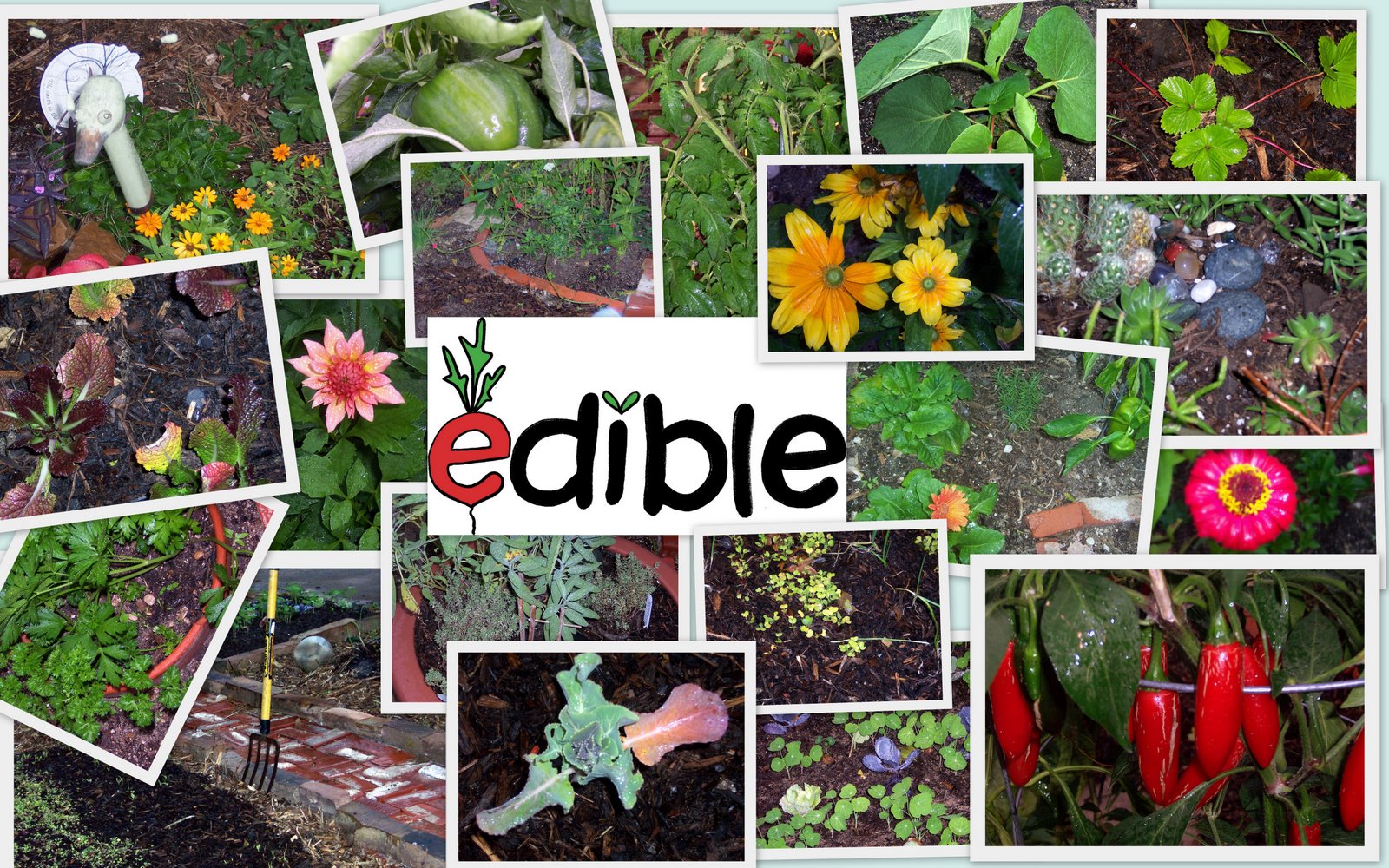
So far so good considering it is the 7th day of the year. It can be as simple as having mint in my tea or parsley in last night's soup. I've only had to run out to the garden at 10:30 pm once so far...I grabbed a radish and cut 2 leaves from a cabbage, rinsed them off and ate them on the way up the stairs. I really wanted to start small and see if I could even do this, before trying something as drastic as eating ONLY FROM MY GARDEN. (My boys would starve.)
Anyway, as you can see there are still a few things to choose from in the garden here in Texas, Zone 8. Also, in my makeshift greenhouse in the workout/game room of my house, I have 2 lemon trees, 5 rose bushes, 1 fig tree, 1 blackberry, 1 orange tree, 1 olive tree and 50 strawberry plants are sleeping in the bottom of the fridge. All of these things are scheduled to be planted this week and it looks to be beautiful! Texas is so CRAZY for growing things. We were at a wedding on Sat, Jan. 3 and the temp. was 80 degrees, by Mon. we were under an ice storm and covering everything up and bringing everything in and today, Wed. we are expecting the 70's again. Well, we won't be bored!

Monday, November 17, 2008

time to plant garlic


Homegrown Garlic Makes for Effortless Seed SavingNovember 2nd, 2008
One of the great things about raising shallots, multiplier onions, and gourmet garlic is that it’s so easy to produce your own seed stock for future plantings. The subject of garlic seed saving was raised in a recent comment and inquiry from Cynthia:
“I had such a good crop of Fireball garlic last year that I used some of the best cloves for planting last week. Hope that it works. Have others saved their own bulbs or are you buying new ones every year?”
Saving the Best of Your Garlic Harvest for Seed Stock
It doesn’t get any simpler in terms of seed saving than to sort through your garlic harvest and select the largest and best looking bulbs to become the seed stock for future garlic generations. But it does sometimes require a bit of discipline to resist cannibalizing those prized garlic bulbs that must be set aside and reserved for seed!
While most gardeners want to use super sized bulbs for planting stock, some argue that the medium sized bulbs are just as good and maybe even a better choice for planting. I’m OK with using either as seed stock, but reject any dwarfed cloves from the seed quality bulbs and send them off to become salsa or guacamole instead of seed.
One caution when saving garlic seed is to ensure that all of the garlic bulbs designated as seed stock come from healthy plants that grew free of any sign of disease. Plant viruses are common in the garlic world and infected bulbs are perfectly fine for eating, but are best avoided when it comes to selecting your garlic seed.
Diagnosing, Managing, and Controlling Garlic Viruses
That’s easier said than done because the signs of disease aren’t always obvious and can be easily overlooked. Garlic viruses sometimes make themselves known by the appearance of stunted plants, misshapen leaves, and poor growth in the field.
Other times diseased crops may be revealed by slightly yellowed or discolored leaves, smaller sized bulbs at harvest, or garlic that stores poorly. While the presence of a virus in the garlic seed won’t automatically doom your crop, if you have doubts about the health of the seed I would recommend starting your next planting with good quality seed stock obtained from a reputable garlic seed supplier.
I’m obsessive about rotating my garlic beds so that the crop doesn’t grow in the same spot more often than once every four or five years. You needn’t worry over the following concerns that Josh expressed regarding crossing though: “If I plant potato onions next to gourmet garlic is there any threat of the two crossing to make some sort of hybrid plant?”
Other Considerations for Saving and Maintaining Garlic Seed
There’s no pollination necessary in the sex life or reproduction of garlic, so there’s no risk of garlic crossing with nearby shallots or potato onions. In fact you don’t even have to worry about different varieties of garlic crossing with each other in the garden, and no separation or isolation is required to save and maintain pure seed stock.
As far as using garlic from the supermarket for seed, I always advise against it with good reason. First, the seed may have been treated to discourage it from sprouting, but more importantly obtaining specialty seed affords the opportunity to explore and experience the wide assortment of flavors and types of gourmet garlic varieties rather than settle for the single softneck variety that is likely to be stocked by your local grocer.
After harvesting and curing garlic I store the bulbs indoors until it’s time to replant them in the fall. Keep them in a cool, dry, location, but never refrigerate garlic. Also, you shouldn’t remove the wrappers or separate the cloves until just before you are ready to plant the garlic seed out into the garden.
Custom Crafted Gourmet Garlic Strains from Your Garden
Saving garlic for seed is an easy way to multiply and propagate your gourmet garlic crop while eliminating the expense of purchasing garlic seed every year. I admit that I frequently purchase a portion of my garlic seed stock anyway, just to try out some new and different gourmet garlic varieties that are out there.
Saving your own seed also has the advantages of enabling you to develop superior garlic strains; as the garlic will become better acclimated to the specific climate and growing conditions present in your own backyard.
Even if you haven’t saved a single seed before, there’s little downside to reserving the best of your garlic harvest to use as the seed for next season’s crop of gourmet garlic!

Wednesday, November 12, 2008

backyard kitchen gardens!


How rewarding to be able to plant a kitchen garden and see the the herbs and vegetables grace the table immediately. While Lori and I were finishing out this beautiful, 'potted' kitchen garden; the chef couldn't wait to use the herbs for the wonderful vegetarian meal she was preparing for dinner!
If you haven't planted anything this fall, at least go down to your local organic nursery and bring home a pot of herbs or two and grow them in your kitchen window. This too counts for eating local!

Tuesday, November 11, 2008

eating your yard

GIMME SHELTER- Eat your yard: A juicy primer on edible landscaping

Published September 25, 2008 in issue 0739 of the Hook


Michael McConkey
Edible Landscaping, website: www.eat-it.com.
PHOTO COURTESY MICHAEL MCCONKEY
Q: I've heard a little bit about "edible landscaping" but would like to know more. What exactly is it? And how would I get started creating edible landscaping around my home? 

A: Edible landscaping puts an emphasis on "less care" plants and trees that supply fresh fruit of some kind of food value. It also goes along with the green home idea, as there is a self-sufficient and healthy living aspect to it.

Most people relate to the fruits they find in grocery stores-- apples, plums, pears, oranges-- but those plants are typically hard to grow, and people who buy them might not necessarily be aware of what they're getting into. After a few years, many people start getting cynical about having to maintain such plants, given the fact that they don't produce anything similar to what's found in stores. 

Edible landscaping takes all the thousands of plant species and narrows it down to those that are less challenging, even not challenging at all, but that produce a tasty fruit. For example, pomegranate, paw paw, hearty kiwi, persimmons, and figs are all fruits that can be easily grown around your home. In addition, the arrangement won't look much different than regular landscaping, as you have to look pretty close to see the fruit on most of these plants. 

Ideally, if you're thinking about edible landscaping, you should start with native plants-- as they already thrive here-- and ones you don't have to spray or cultivate, such as American persimmon, juneberry, or pecan. These native plants don't need alot, as long as there's no competition from grass. On the other hand, if you decide you want native blueberries or raspberries, you may have to add peat moss to the soil or plant them closer to your foundation, as they don't grow in red clay. 

Remarkably, many people are not familiar with all the edible native plants we have. For instance, we were at a festival recently and were handing out paw paws-- even though it's a native fruit, nine out of 10 people said they had never tasted one. Many people are also not familiar with wineberries. 

Of course, there are also some misconceptions about which berries are toxic. Recently, I noticed there were juneberries on a bush in front of the Burger King at Barracks Road. I happened to see a kid walk by and try to eat one. His mother pulled him away, saying "Don't eat those. They're poisonous!" But juneberries were one of the fruits that members of the Lewis and Clark expedition survived on, as they were used in many Native American recipes. Still, there are some berries to watch out for, such as pokeberry, poison ivy berries, and black nightshade berries to name a few. 

If you decide to get more ambitious about edible landscaping, there are dozens of food producing plants to choose from, including strawberry, plum, apricot, apples, cherries, oranges, pears, lemons, currants, even coffee and hops, to name a few. It all depends on how edible you want your landscaping to be and how much work you want to put into it. 

#

Thursday, October 23, 2008

eating local

This month is SQUASH time. Your squash in the garden will not be ready for awhile, but the stores are full of great squash. The following recipe is for a corn bread that is so full of good things that you can just add a salad and be satisfied. Look for a squash that is about as big as a small football. I used a squash called a carnival. A butternut, two acorns, kabocha, etc. would work. We got this recipe from the Creative Arts building at the Texas fair on Saturday and I cooked it on Sunday. It is worth the extra time.

SQUASH CORN BREAD

8 ounces unsalted butter
2 cloves garlic, minced
10/12 chives, minced (garden)
1-3 small peppers, minced (your taste)
3 eggs
1 1/2 cups buttermilk
1 1/2 cups stone ground cornmeal
1 T baking powder
1 1/2 cups flour
3/4 t baking soda
1/4 cup sugar
1/4 cup maple syrup or molasses
1 t ground cinnamon
1/2 t nutmeg
1 T salt
1 t fresh rosemary, chopped (garden)
1 t fresh thyme, chopped (garden)
1 t fresh sage leaves, chopped (garden)
2 cups of roasted squash

First: Cut your squash in half, clean out the seeds (save the seeds to grow next year)
Add 1 t olive oil, sprigs of rosemary and thyme leafs to center of each one
Cook your squash on 350 degrees for 30-50 minutes (should be soft in the middle)
Scoop out flesh, it should be close to 2 cups

Second: Now change temperture on your oven to 400. You will need a 10" iron skillet or a 13x11" baking pan. Place this in oven to heat.
Third: Saute the chives, peppers and garlic in the butter for about 3 minutes, set aside to cool slightly.
Fourth: Mix all dry ingredients in one bowl (not fresh herbs)
Mix buttermilk, maple syrup and eggs, now add sauted mixture, now add dry ingredients, stir lightly, just until moistened. Fold in the squash and fresh herbs.
Fifth: Remove hot pan from oven, spray or oil lightly. Pour in the batter and bake at 400 for 40-50 minutes or until firm to the touch on the top and golden brown.
(I had to use a toothpick a few times to make sure the center was done.)

We had this with chili on Sunday and it was a big hit! I plan to try another squash soon. T

Wednesday, October 22, 2008

new venture

Going green one backyard garden at a time. In an effort to change our families' ecological footprints, Lori and I are trying our best to eat locally. It made sense to plant our own backyards and it just started from there. We now have a new business venture together. We currently have four organic fall vegetable gardens planted in the Dallas metro area!
Our BIG plan is to plant and maintain lots of vegetable and herb gardens in our area. Ultimately, we would like to teach families how to maintain their own gardens. We have a vision of families once again going out to the garden instead of the canned food aisle!
We feel passionately about backyard kitchen gardens!